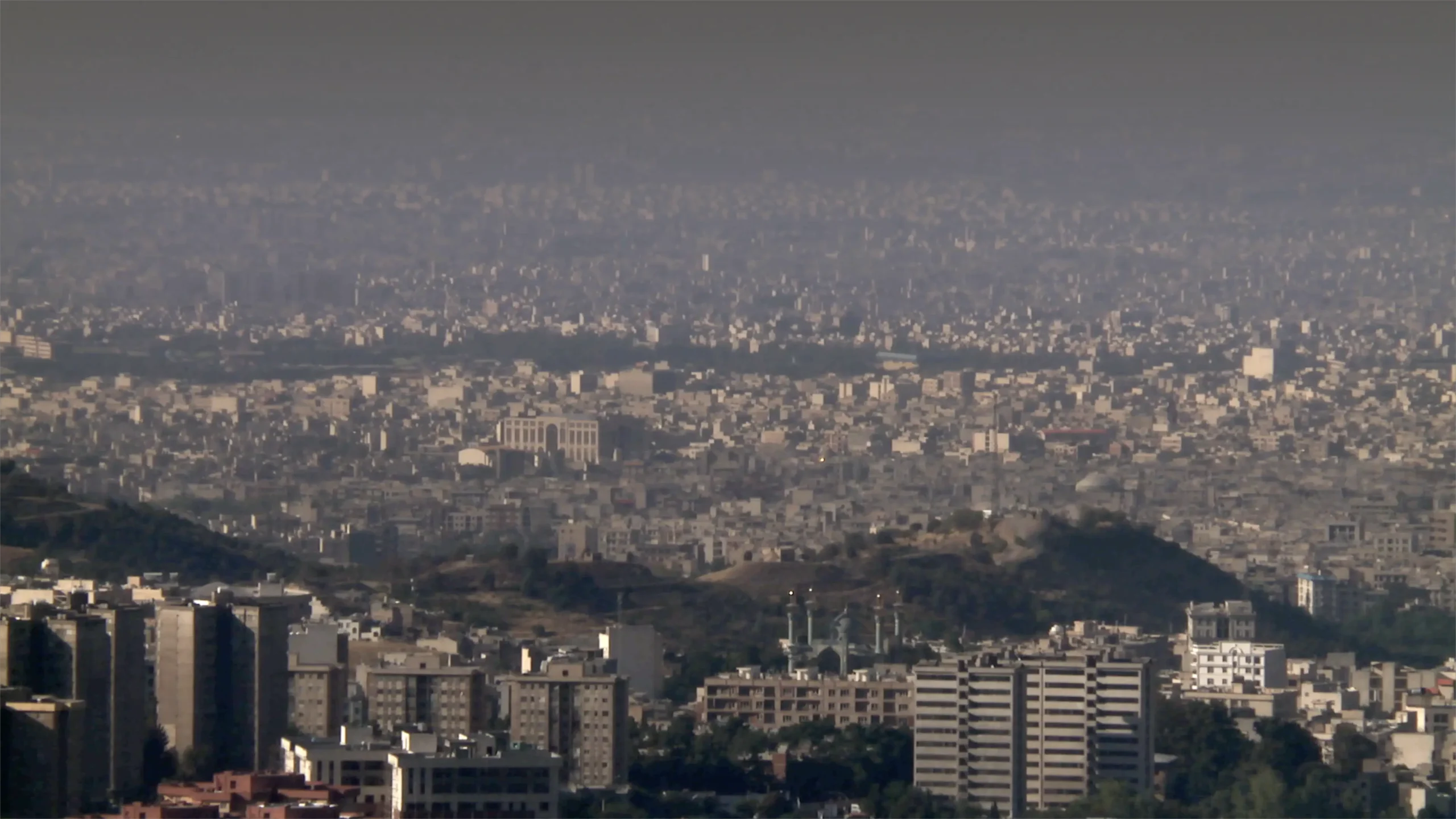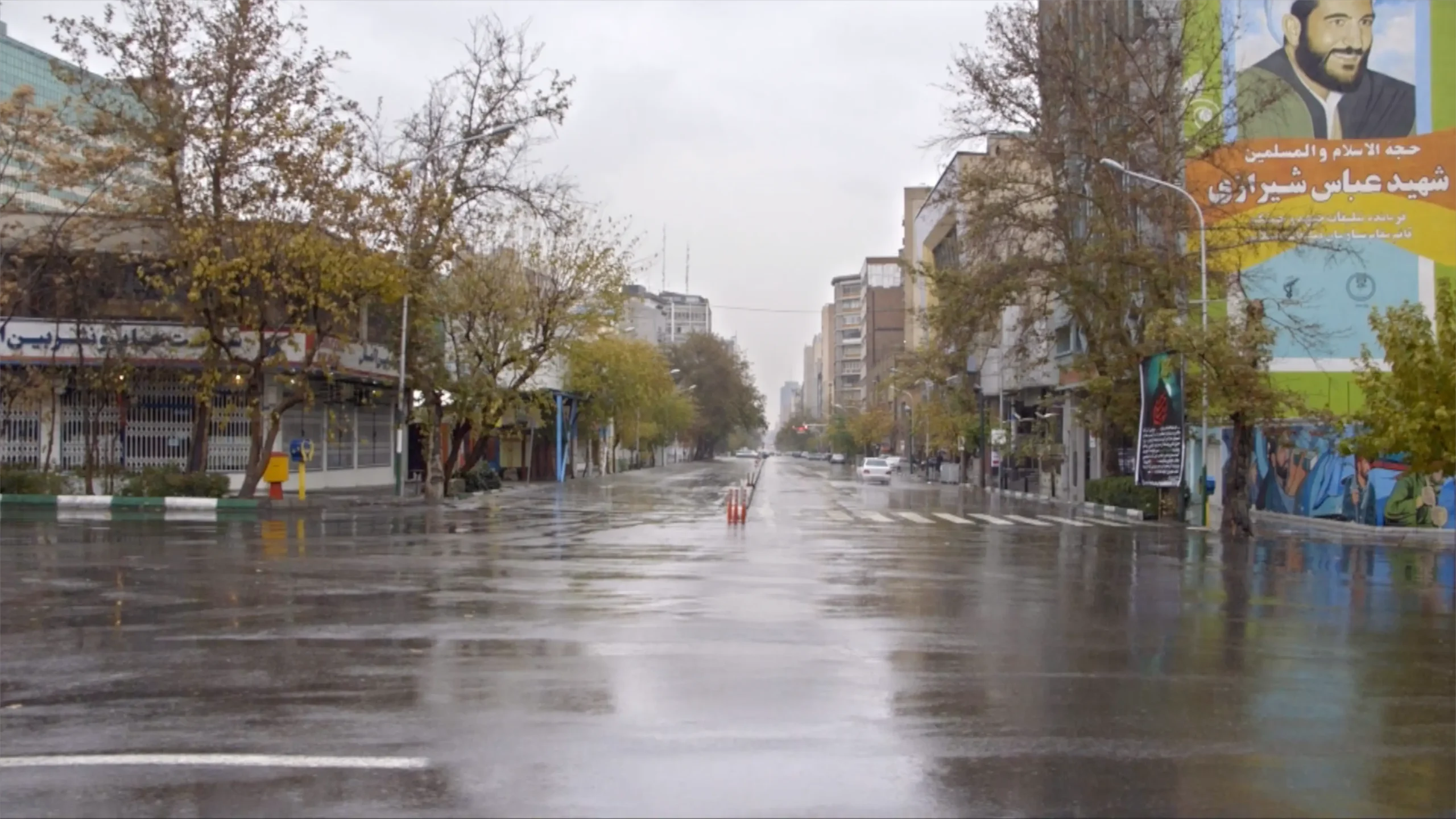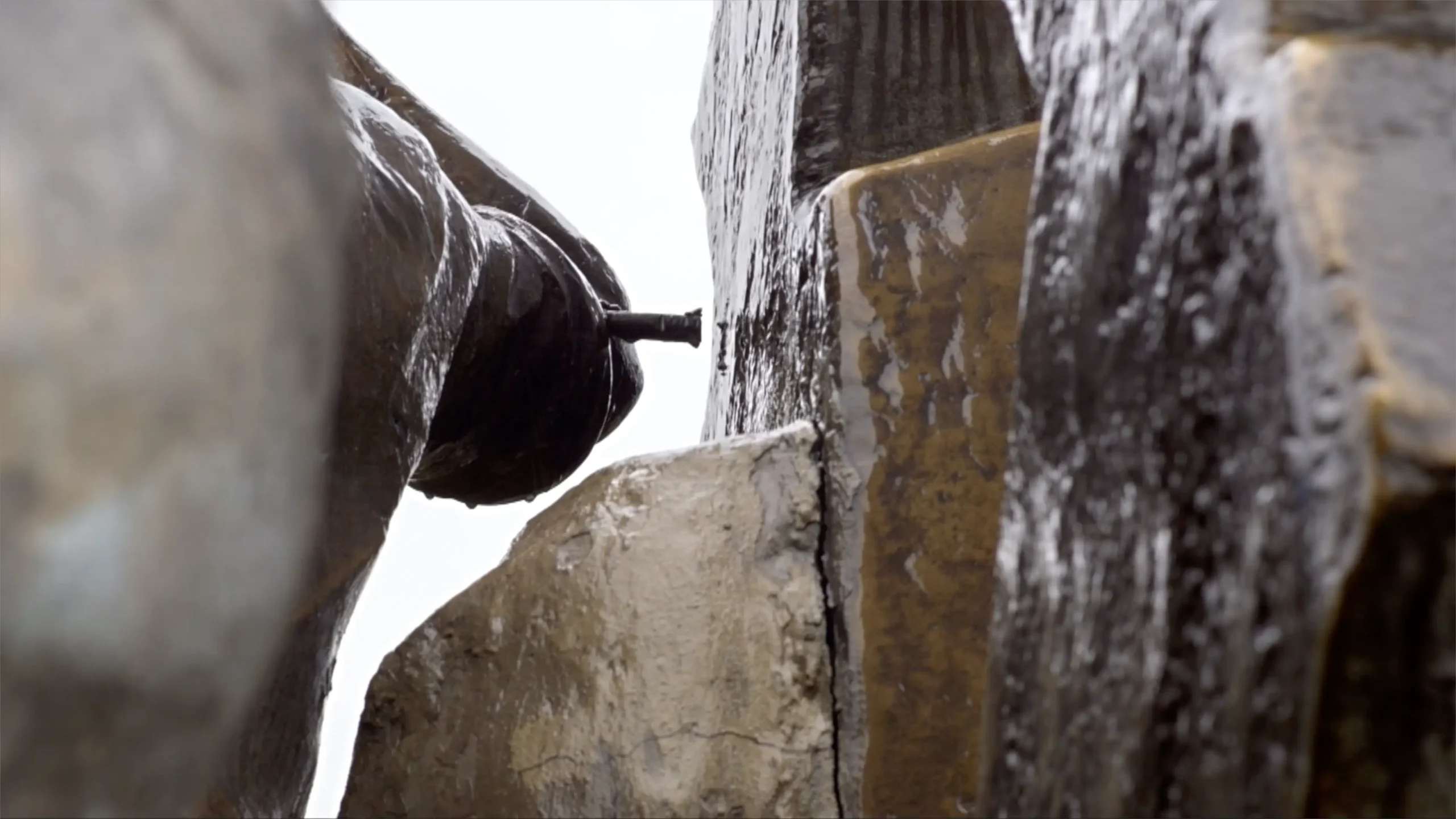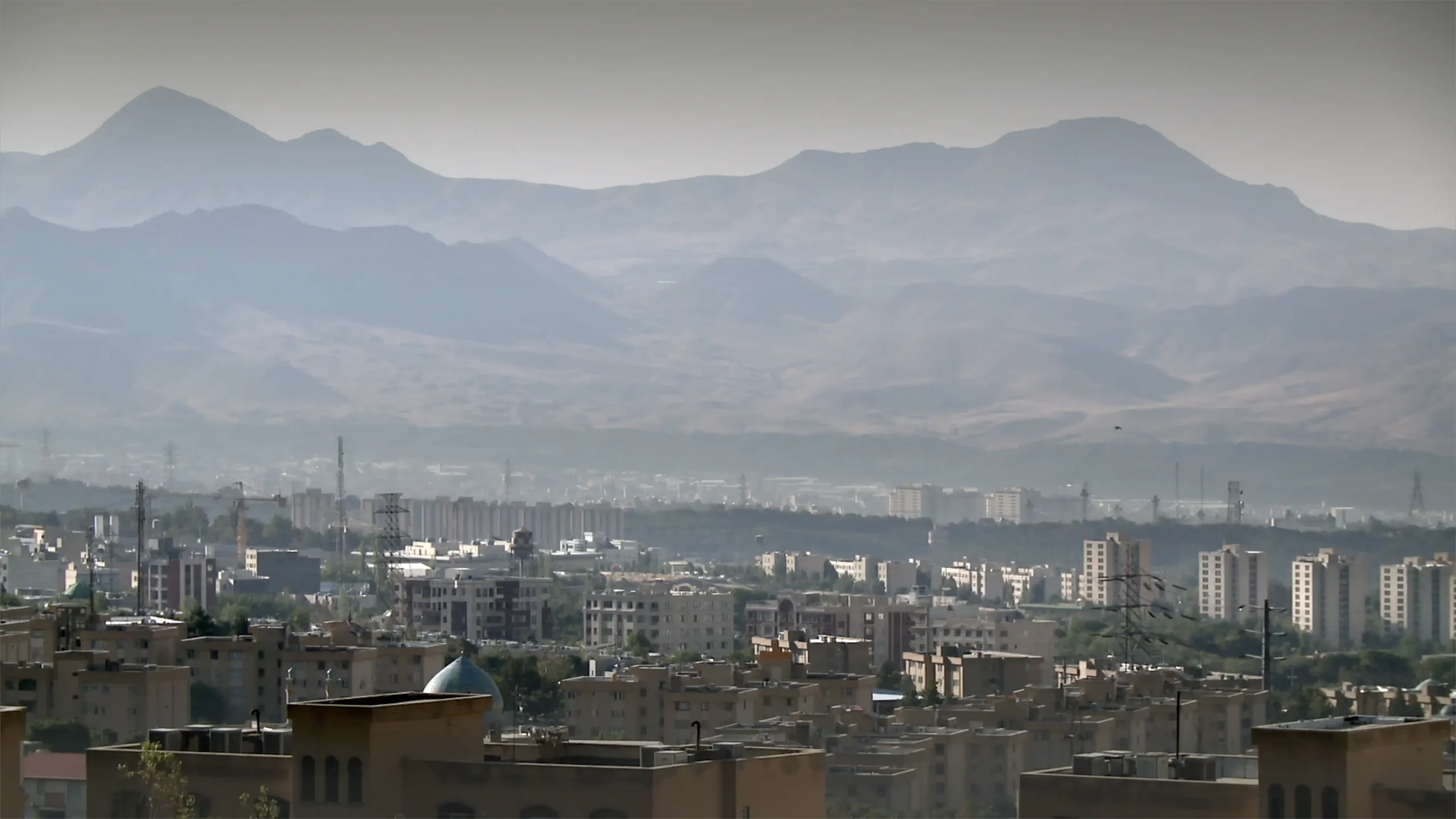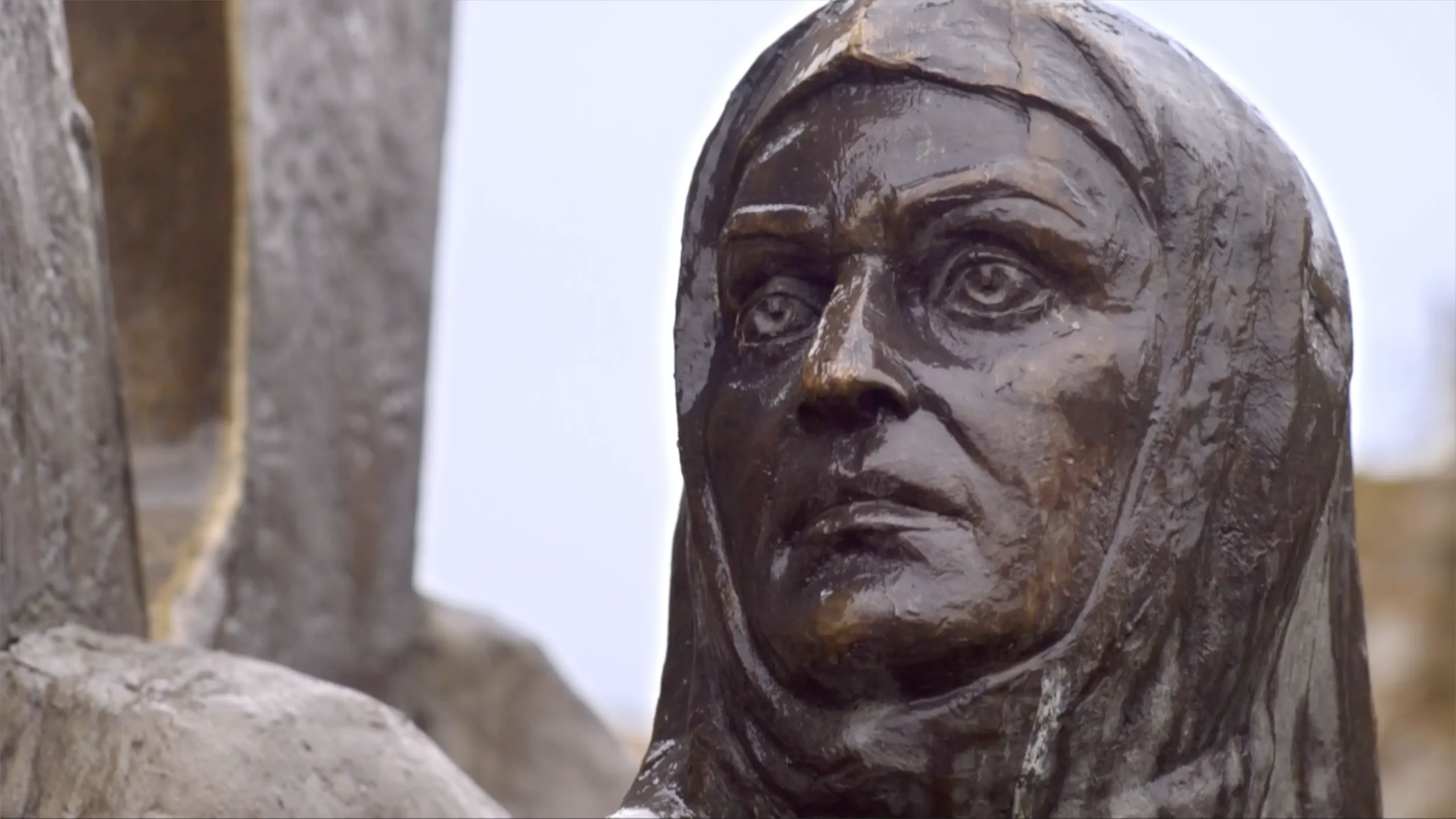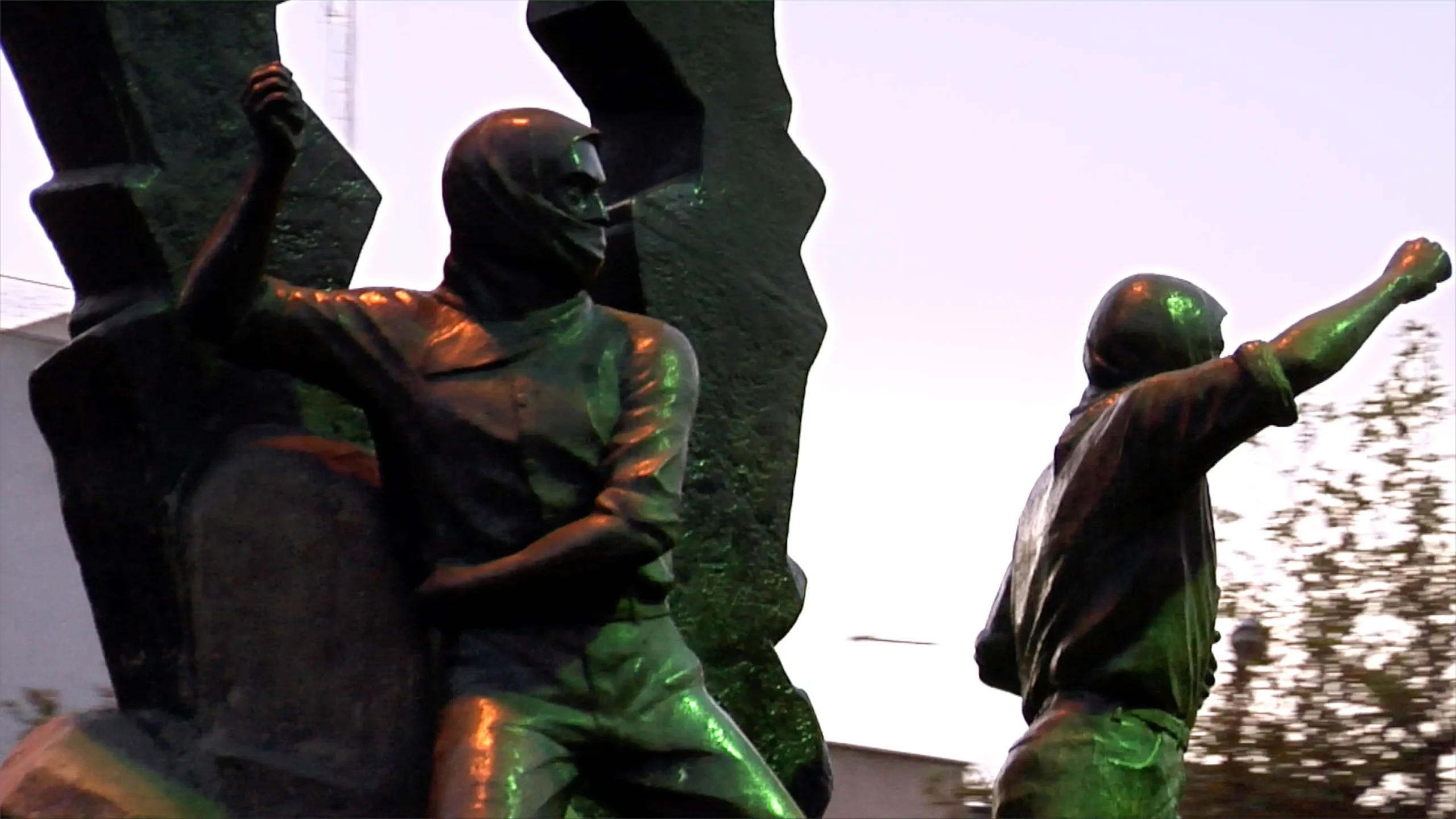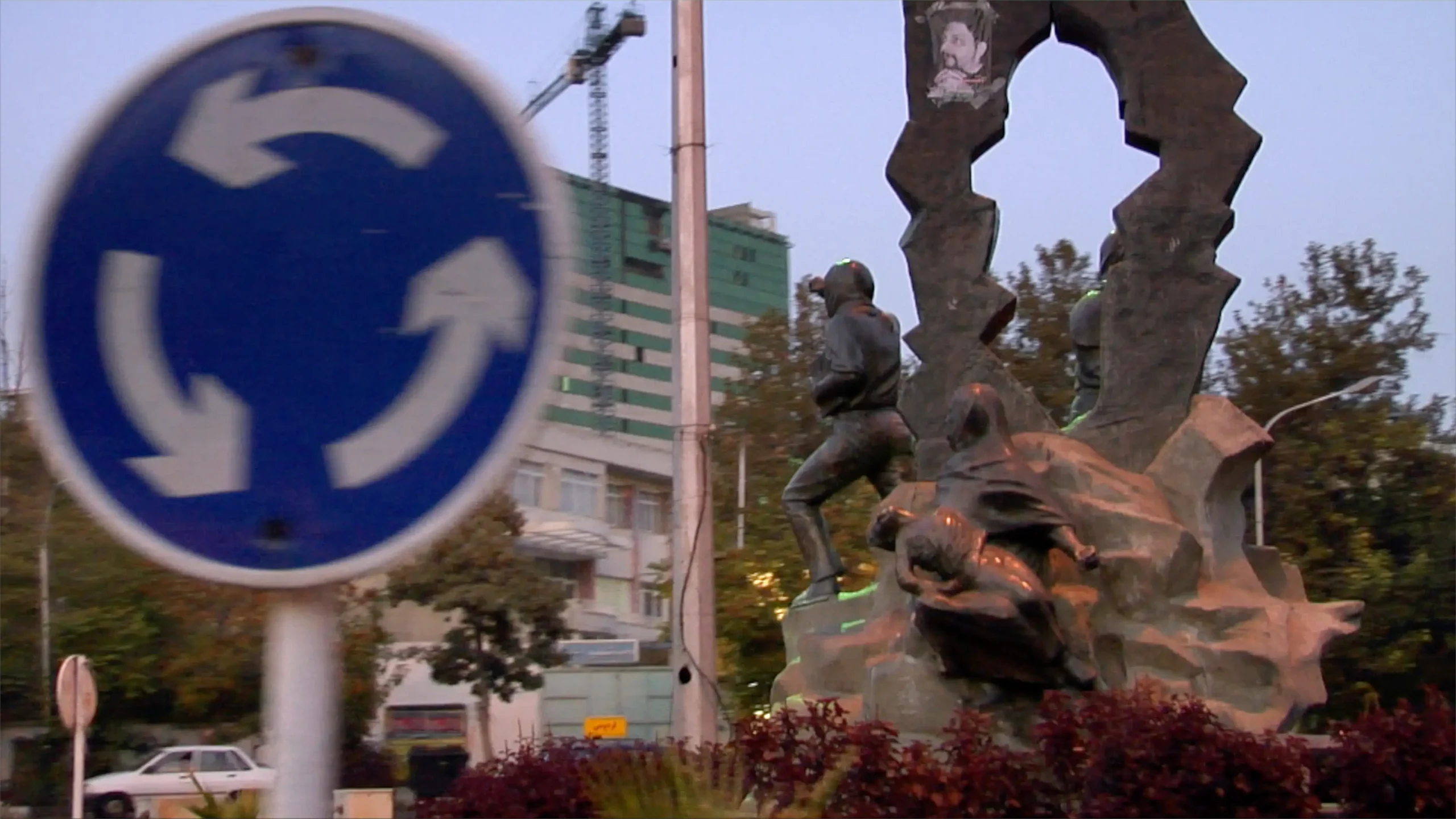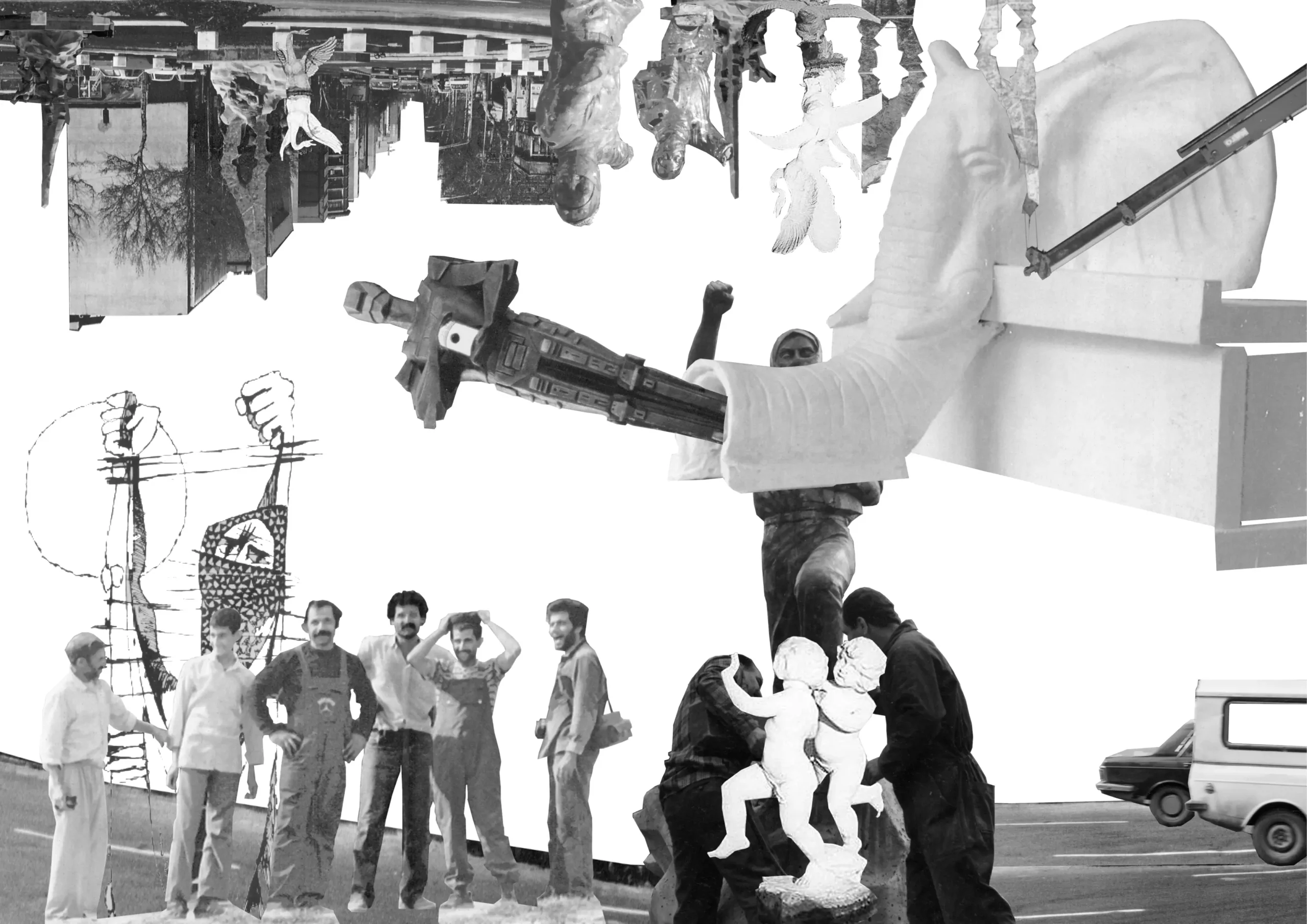
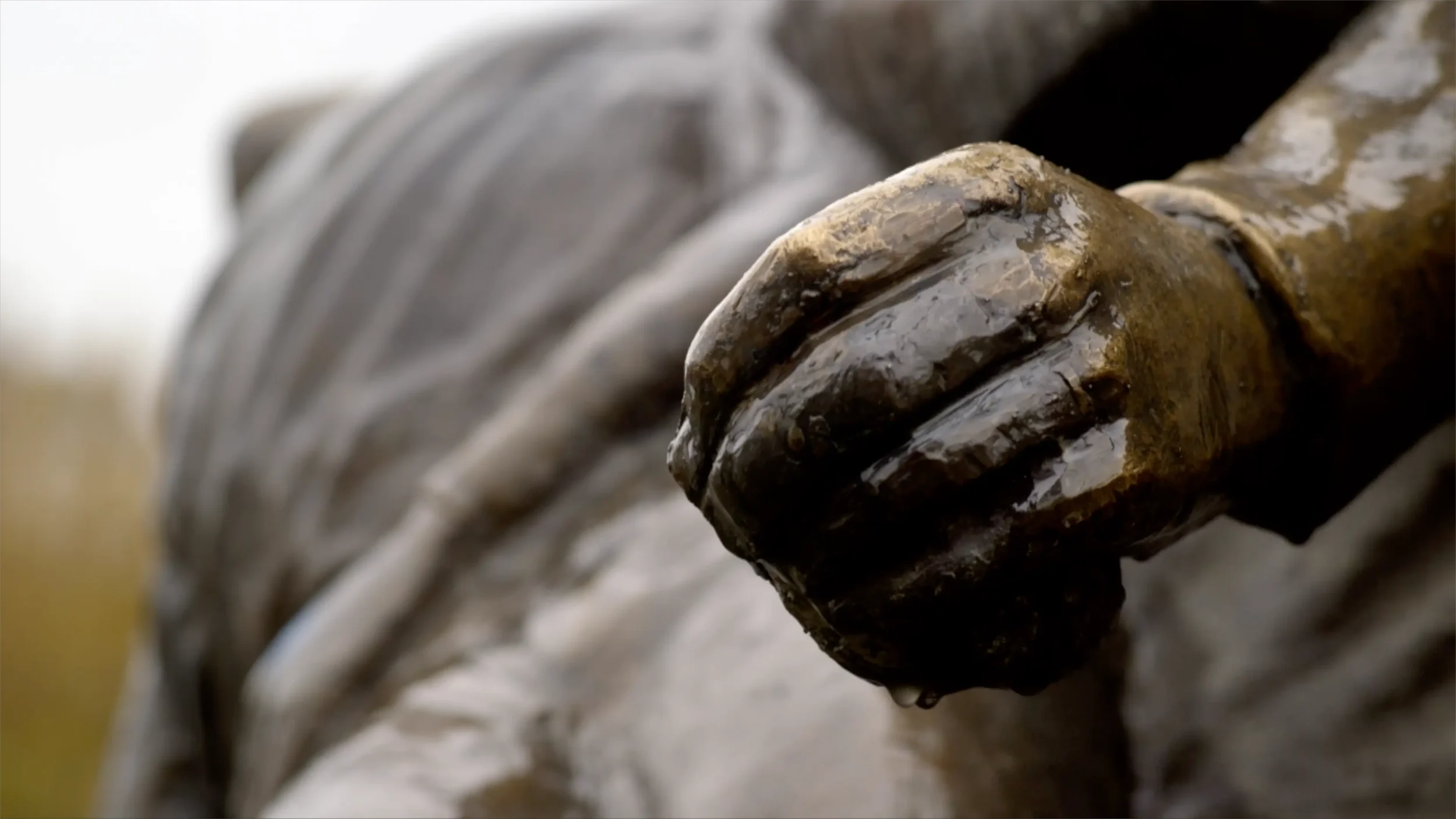
An allegorical bronze-and-cement sculpture stands at the intersection of Felestin (Palestine) Street, in the centre of a large roundabout. Depicting several figures, one with a fist raised in a gesture of defiance, the work is a monument to the Palestinian struggle, particularly the First Intifada. It lasted from December 1987 until the Madrid Conference in 1991, and it was precisely during this period that construction of the monument took place, from 1989 until its inauguration in 1990.
The sculpture was the first public monument ever built in post-revolutionary Tehran. The point of departure for this project is this monument at the centre of Tehran and its historical background. Here, my analysis extends beyond the physical location to examine the spatial context surrounding it, viewed through the lens of contemporary art and political history. The monument in Tehran is a site- and context-specific example that serves as a conceptual point of departure for a diverse array of analogous political contexts and historical entanglements.
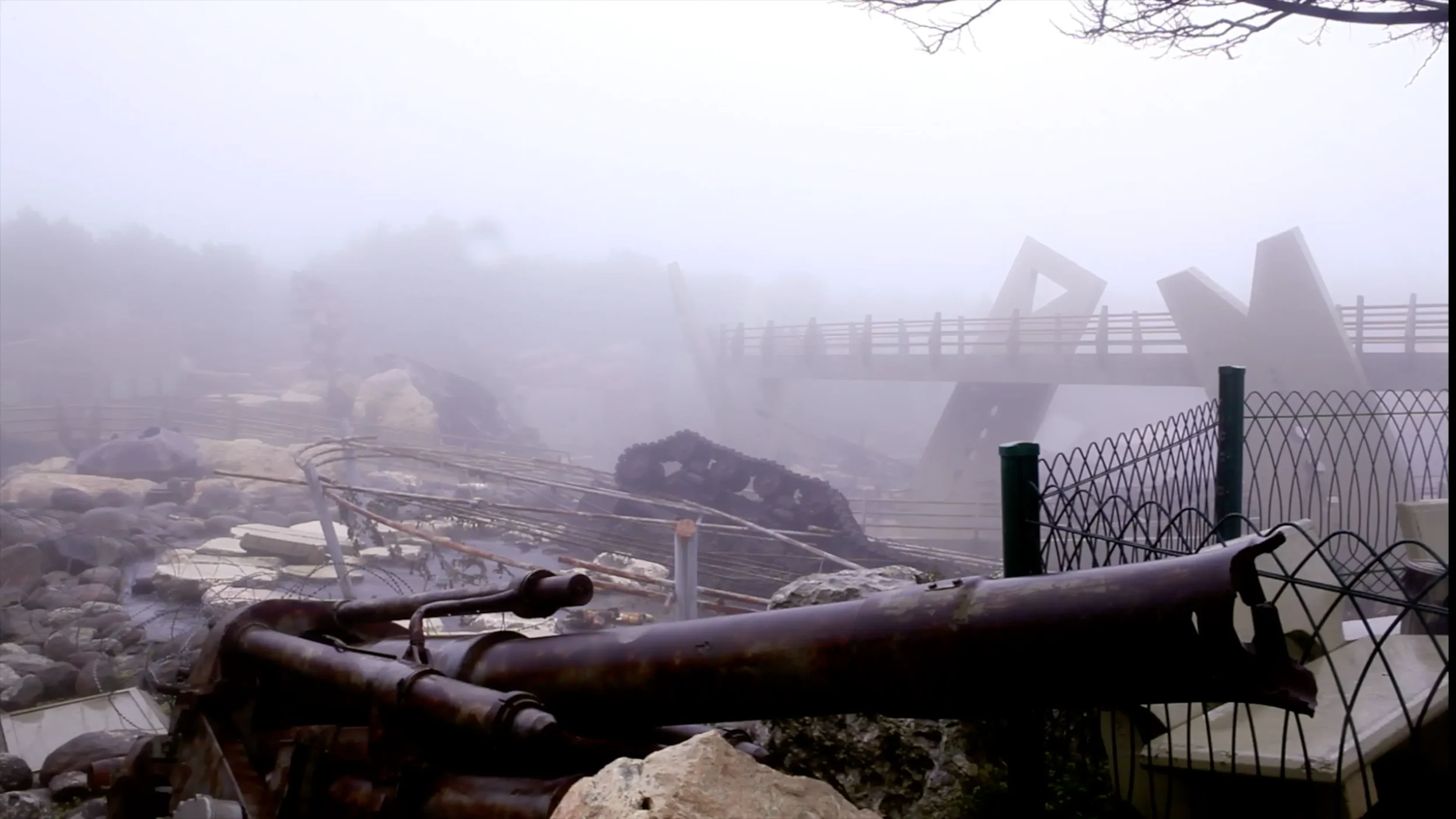
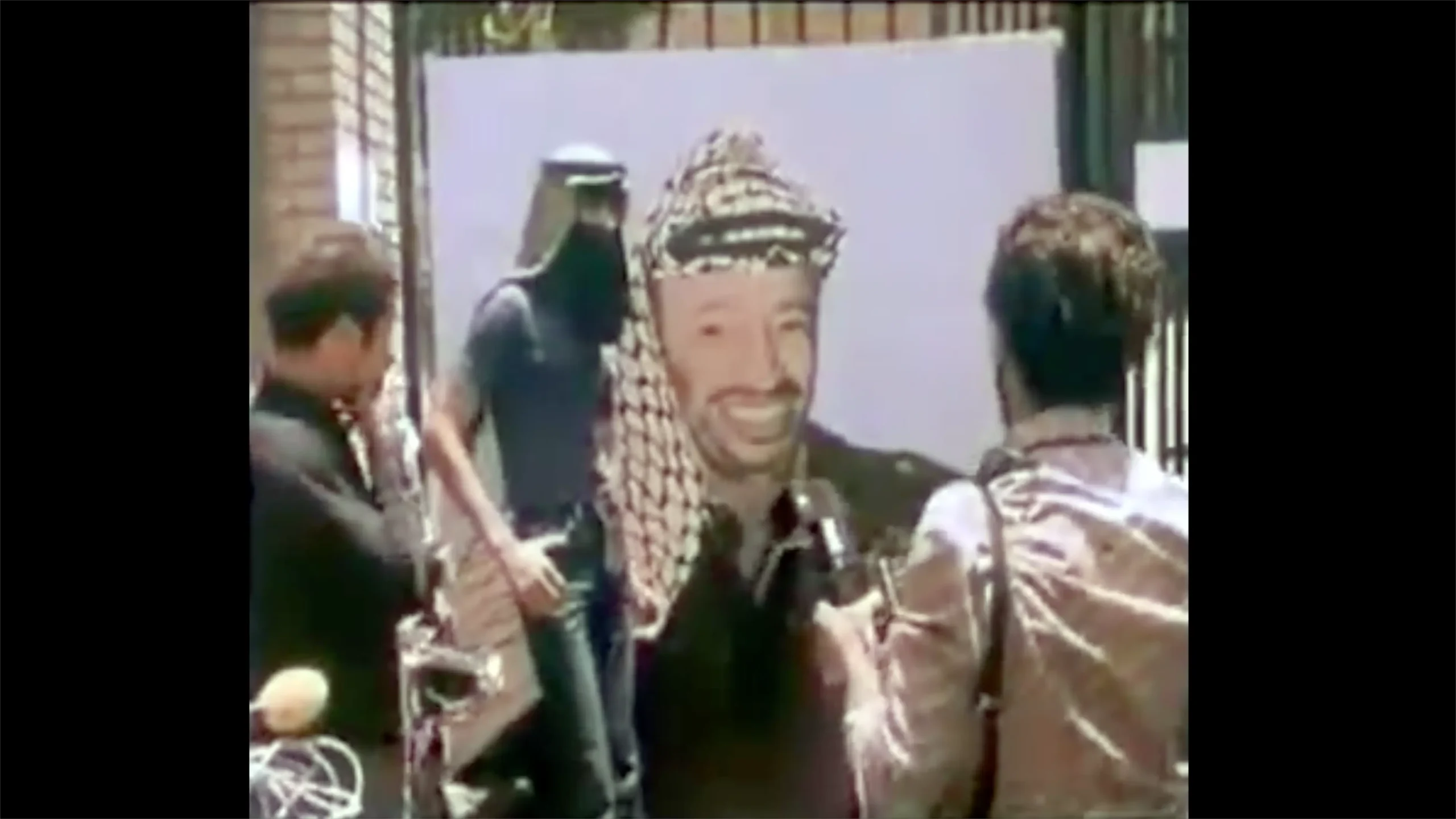
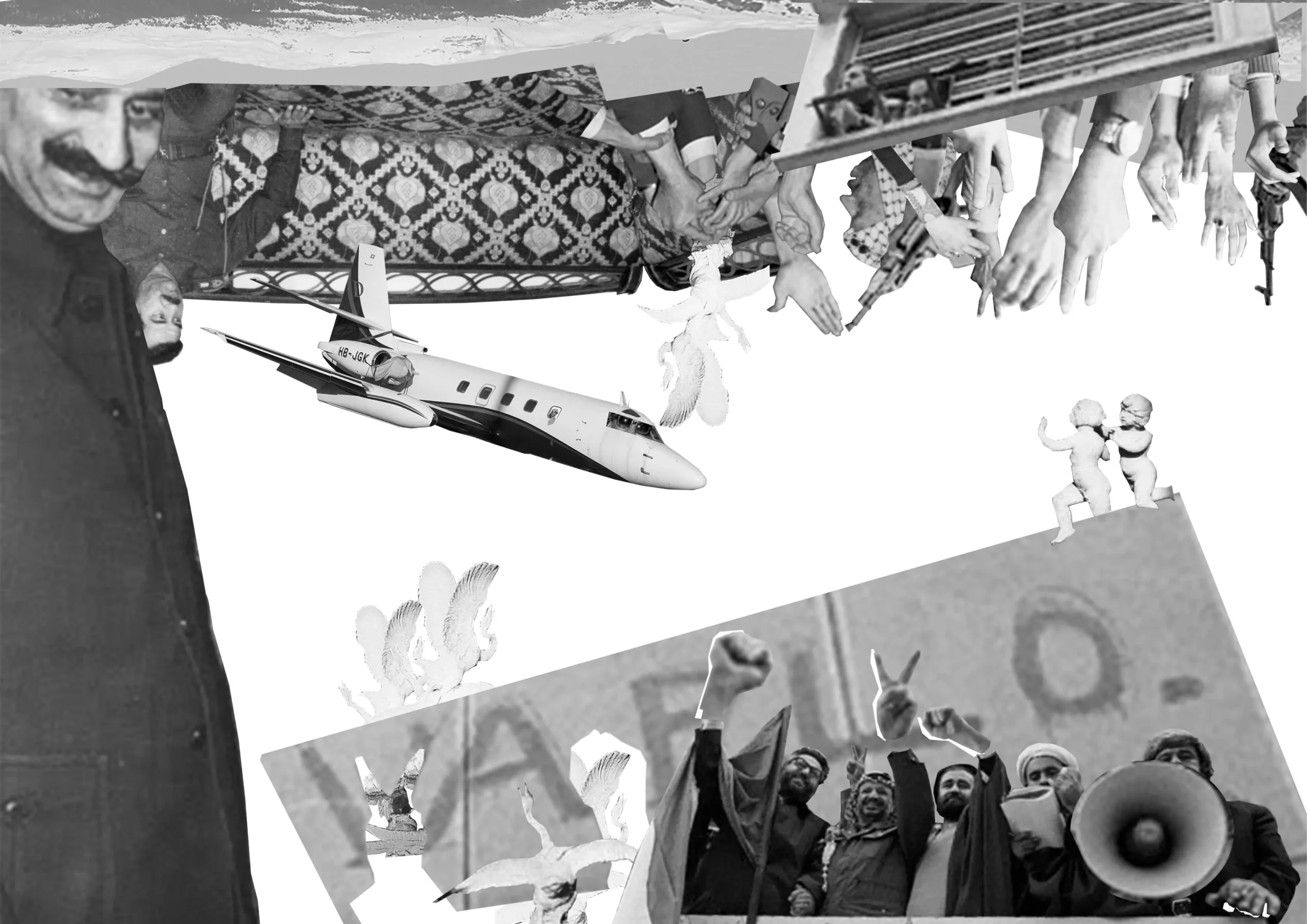
This project presents the research process through the lens of archival materials unearthed during a collaborative filmmaking project, juxtaposing analysis and commentary on this footage with the monument’s materiality and Felestin Square. Elaborating on the relationship between two hyper-politicised social environments, Palestine and Iran, aims to bring micro-level historical narratives into dialogue to investigate this political relationship.